
Get a Free Quote
Thank You!
We'll get back to you shortly. For immediate help, call (855) 473-5280.

Crawl Space Greenville SC helps homeowners across Greenville and the Upstate take back the space under their house. When the crawl space turns damp, musty, or moldy, it does not stay down there: that air rises into your living space, and the moisture goes to work on your floor joists, insulation, and subfloor. We handle the full fix, from crawl space encapsulation and vapor barriers to structural crawl space repair, interior waterproofing and drainage, and a sealed access door that keeps the outside out. One crew diagnoses the whole crawl space and solves it, not just the part you can see from the hatch.
The problem here is rarely just bad luck. Greenville sits on heavy red Piedmont clay that holds water instead of draining it, in a humid subtropical climate that runs 70 to 75 percent relative humidity through the summer. Older homes around North Main, Augusta Road, and Overbrook were built with open foundation vents that pull that damp outside air straight under the house, where it condenses on cool framing. Add a sloped lot steering runoff toward the foundation and you get the wet, musty crawl space most Greenville homeowners eventually deal with. Every job starts with a free inspection, so you know exactly what is going on down there before you spend a dollar.
If any of these sound familiar, moisture is already working under your Greenville home. These are the warning signs we find most often on Upstate crawl spaces.
That "old house" smell usually is not the house, it is the crawl space. Damp air and mold spores ride up through gaps around plumbing and ductwork and settle into closets and back rooms. If you notice it most on humid days, the source is almost always under the floor.
When floor joists and subfloor stay damp, the wood softens, loses strength, and starts to flex underfoot. A floor that bounces near the kitchen or a bathroom is an early warning that moisture has reached the framing, and it only gets more expensive the longer it sits.
Water that pools on the crawl space floor after a storm, or soil that never dries out, means moisture is getting in faster than it can leave. On Greenville's clay, that water sits, and it keeps the whole space wet enough to grow mold and rust metal.
If your home feels sticky even with the AC running, or you see condensation on windows and ductwork, a wet crawl space is often feeding that moisture up into the living area. Drying and sealing the crawl space is usually what finally fixes the humidity upstairs.
White, gray, or black growth on the wood, fuzzy insulation, or dark stains on the joists all point to a moisture problem that has been building for a while. Mold under the house does not stay under the house, and it has to be treated before the space is sealed.
A damp, open crawl space makes your HVAC work harder to condition humid air, and wet insulation stops doing its job. Sealing and conditioning the space takes that load off the system, which is why encapsulation often pays part of its way back in lower bills.
Every service starts with a free inspection and a clear plan. Here is what we do under Greenville homes, in the order the crawl space actually needs it.
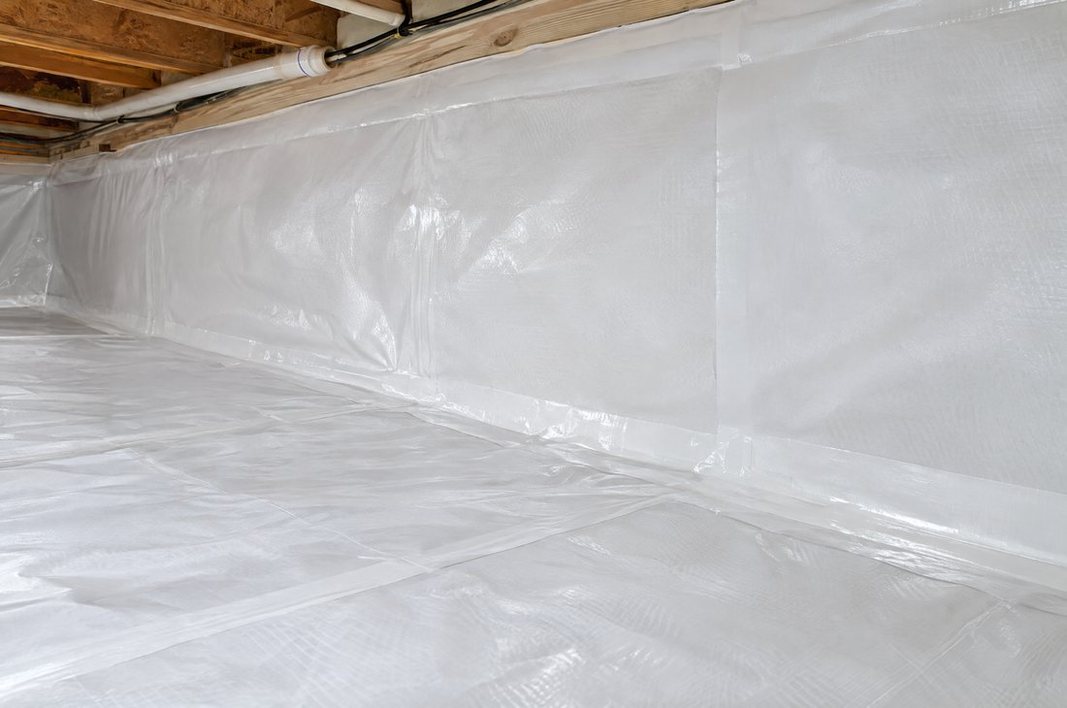
Crawl space encapsulation is the complete fix, and in Greenville's humidity it is usually the one that actually solves the problem for good. We seal the floor and foundation walls with a heavy, reinforced vapor barrier, close off the open foundation vents that let humid air in, detail the liner around piers and plumbing, and seal the access door so the crawl space becomes a clean, dry, closed space instead of an open vent under your house.
From there we condition it. A crawl-space-rated dehumidifier holds the humidity in the 50 to 55 percent range year round, which is what keeps mold from growing and wood from rotting. If the inspection turns up standing water, we handle the drainage first, because a liner over wet ground just traps the water. Done in the right order, encapsulation protects your floor joists and subfloor, cuts the musty air feeding your living space, and takes a real load off your HVAC.
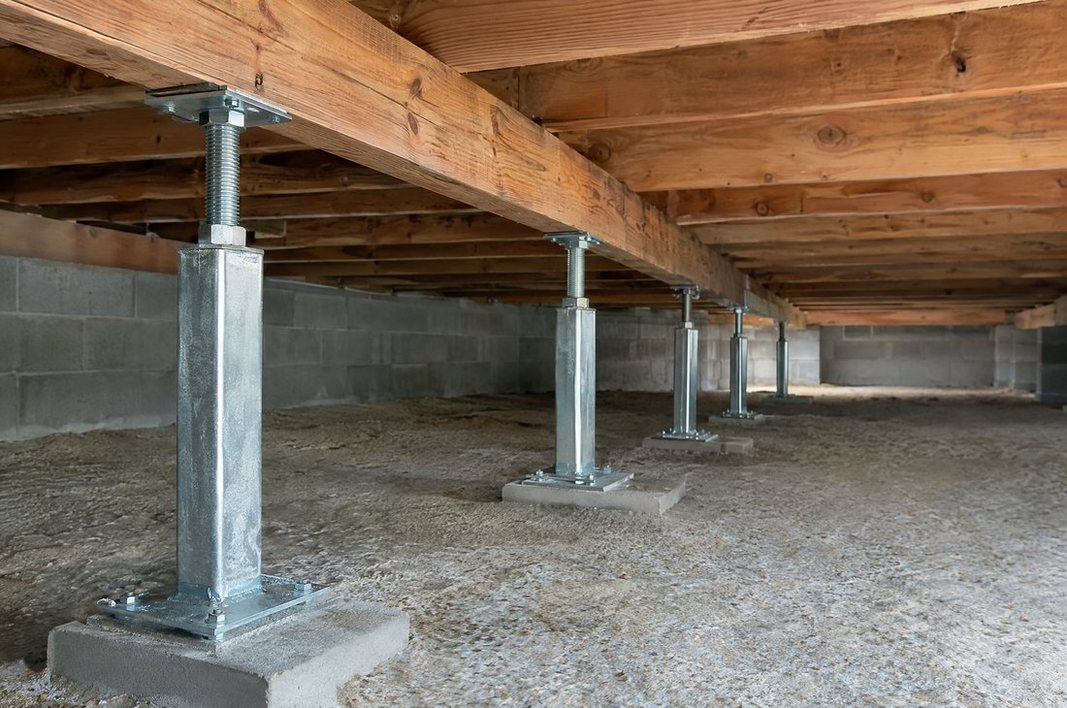
By the time a crawl space has been wet for a few years, the damage is usually structural, not just cosmetic. Soft, spongy floors, joists you can push a screwdriver into, cracked or sagging beams, and buckled subfloor all come from framing that has stayed damp long enough to rot or grow fungus. We repair the wood that is failing, sister or replace compromised joists and beams, and reset support where the floor has dropped.
Where the floor has settled or bounces, we add or adjust steel support jacks on proper footings to bring it back level and take out the flex. The repair only lasts if the water stops, so we correct the moisture source at the same time, whether that is drainage, a vapor barrier, or full encapsulation. Fixing the framing without fixing the cause just buys you a few years before you are back under there.
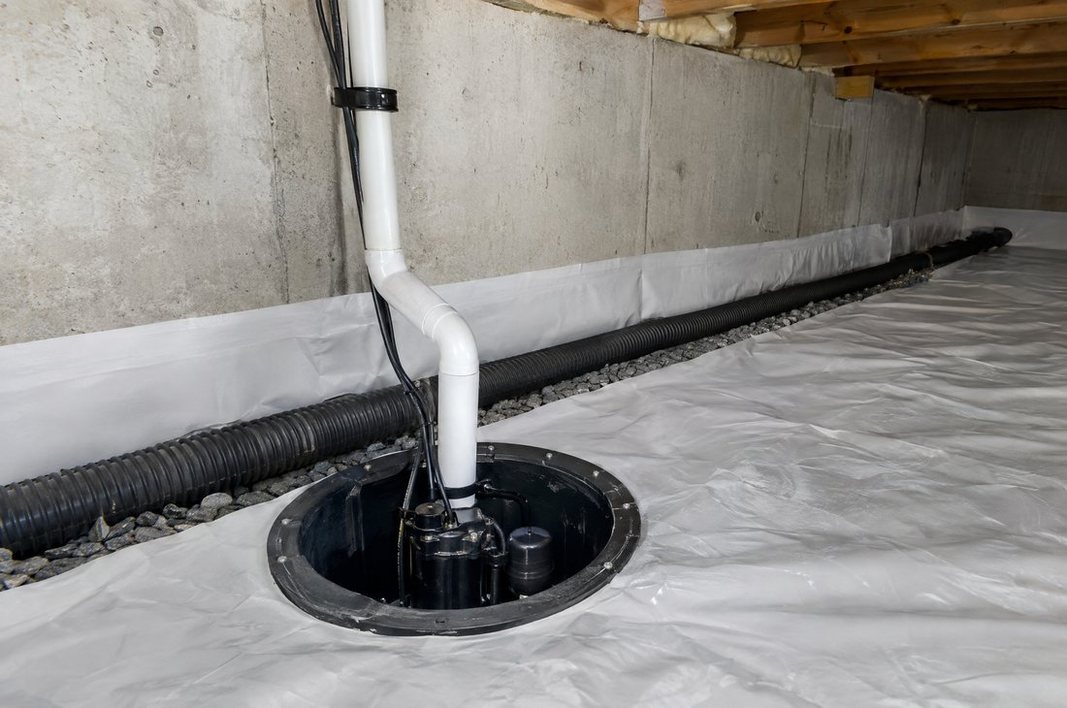
When water gets into the crawl space, not just humid air, you need waterproofing before anything else. On Greenville's clay and sloped lots, runoff and groundwater push against the foundation and find their way under the house, where it has nowhere to drain. We stop it with interior drainage: a perimeter drain channel dug along the footing that collects the water and carries it to a sump pump, which pumps it up and away from the house.
We size the system to how much water the space actually sees and set the sump where the water collects, so a heavy Upstate storm does not overwhelm it. Waterproofing is the piece that handles liquid water; it usually pairs with a vapor barrier or full encapsulation to handle the humidity afterward. Controlling the water first is what makes everything installed on top of it last.
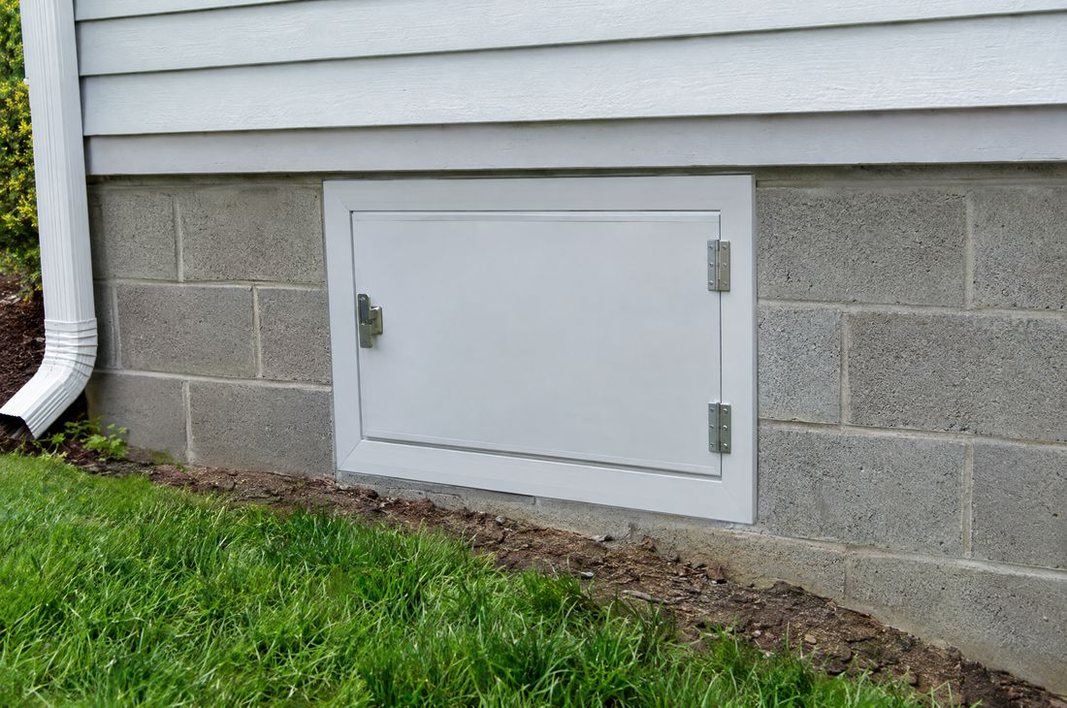
The access door is the one opening left in a sealed crawl space, and on most Greenville homes it is a rotted piece of plywood, a rusted metal panel, or a gap stuffed with a brick. Any of those let humid air, water, and pests right back into the space you just paid to dry out. A proper crawl space access door is the finishing piece that keeps the seal intact.
We install an airtight, insulated door that locks into the foundation wall with a weather-tight seal, built to shed water and keep rodents, snakes, and insects out. It gives you clean access for maintenance without breaking the encapsulation every time. On a sealed or encapsulated crawl space it is not optional, it is what keeps the whole system working the way it should.

A wet crawl space in the Upstate is rarely one thing gone wrong. It is the soil, the climate, and the way the house was built all working together, and around Greenville all three push moisture under your floor. Here is what is actually happening down there.
Greenville sits in the Piedmont on heavy red clay, the soil is literally named the "Greenville series." Clay drains slowly, so rain and groundwater sit against the foundation and wick up through the bare dirt floor of the crawl space instead of soaking away. The ground under your house stays damp long after the yard looks dry.
Greenville gets around 47 inches of rain a year, and relative humidity climbs into the mid-70s through the summer with dew points above 70 degrees. That moisture-heavy air is the fuel. A crawl space is the coolest, darkest part of the house, so it is exactly where that humid air condenses into water on the framing.
Older Greenville homes were built with open foundation vents, based on an old idea that outside air would dry the space out. In our climate it does the opposite: those vents pull warm, humid air in, it hits cool joists and ductwork, and it condenses. Here, sealing the crawl space works where venting it never could.
Greenville sits in the foothills of the Blue Ridge, and a lot of homes are built on a grade. Roof runoff and water coming downhill from above head straight for the foundation, and on clay that will not absorb it, that water ends up under the house instead of draining away.
None of this changes on its own. The clay, the humidity, and the slope are not going anywhere. The fix is to seal the crawl space off from the ground and the outside air, control any liquid water with drainage, and hold it dry with a dehumidifier. That is exactly what encapsulation and waterproofing are built to do.
Every job runs the same way, in the same order, because the order is what makes the fix last.

We go all the way under the house, not just a look from the hatch, and check moisture levels, the vapor barrier, the joists and beams, drainage, the vents, and the access door. You get a clear picture of what is going on and photos you can actually see.
We map the fix by cause: liquid water and drainage first, then the vapor barrier or full encapsulation, then humidity control, then any structural repair. You get one written price before we start, with nothing added later.
Our crew handles the whole job: clearing and cleaning the space, treating mold, making structural repairs, installing drainage and the sealed liner, setting the dehumidifier, and fitting a new access door. One team, start to finish.
We check the humidity readings, walk you through the finished space with photos, and leave it clean and inspectable. You end up with a crawl space that stays dry and a clear record of what was done.
We are not a general contractor or a pest company adding crawl work on the side. Sealing and repairing crawl spaces is the whole business, so you get a crew that works under Upstate homes every day and knows our soil, our humidity, and how these houses were built.
We go all the way under, show you photos, and tell you what the space really needs, even when that is a smaller fix than you feared. If the problem is bigger and structural, we tell you that too, before you spend anything.
You get a single fixed price in writing before we start, with no change-order surprises halfway through. And we sequence the work the way it has to go, water first, then seal, then dry, then repair, so the fix actually holds.
Every job is handled by licensed, insured crews and backed by a written warranty. Your home is covered while we work, and the system is covered after we leave, so a fix that is supposed to last actually does.
Most crawl space companies around Greenville will not put a number on their site. We will. These are real 2026 ranges for the Upstate so you can plan, but the honest answer is that every crawl space is different, so the exact price comes from a free inspection.
Full seal: vapor barrier on the floor and walls, vents and access door sealed, dehumidifier set. A vapor-barrier-only job runs less, around $1,200 to $4,000.
Interior perimeter drain and a sump pump to move liquid water out before the space is sealed.
Joist and beam repair, support jacks, and subfloor work, depending on how far the moisture damage has gone.
What moves the price: the square footage and height of the crawl space, how much standing water and moisture damage is down there, the thickness of the liner, whether structural repair or mold treatment is needed first, and add-ons like a new access door (around $150 to $600) or a dehumidifier ($1,000 to $3,000). Permits, where required, add a little more.
These are typical Greenville-area ranges for planning, not a quote. We price your crawl space at a free on-site inspection before any work begins.
Straight answers to what we hear most during free crawl space inspections around Greenville.
A full crawl space encapsulation in the Greenville area usually runs about $3,500 to $10,000, with most standard homes near $5,000, which works out to roughly $3 to $7 per square foot. A vapor-barrier-only job runs less, around $1,200 to $4,000. Square footage, water and mold damage, liner thickness, and any structural or drainage work needed first all move the number, so every job gets a free on-site price.
For most Greenville homes, yes. In our clay and humidity, an open crawl space quietly feeds moisture into your floor system and living space year after year, which leads to rotted joists, mold, musty air, and higher energy bills. Encapsulation stops that at the source. It protects the structure, improves the air upstairs, and often takes enough load off the HVAC to pay part of its own way back.
It depends on what the inspection finds. A ground vapor barrier covers the dirt floor and cuts the moisture rising from the soil, and on a drier, tighter crawl space that can be enough. Full encapsulation adds sealing the walls, closing the vents and access door, and usually a dehumidifier, which is what you need when humid air or standing water is the bigger problem. We recommend the lighter fix when it will actually hold.
Most encapsulation and vapor-barrier work in Greenville County does not require a building permit. If the job includes structural repair, like replacing joists or piers, or adding a drainage system, a permit may be required. We sort out the permit question as part of the inspection, before any work starts.
Yes, but the mold has to be treated first. Sealing over active mold just traps it and lets it keep growing under the new liner. Mold under the house does not stay under the house either, it rides damp air up into your living space, so we treat it and fix the moisture source, then encapsulate, in that order.
Most Greenville crawl spaces take two to four days for a full encapsulation. If the space needs mold treatment, structural repair, or drainage work first, that can add a day or two. You get the timeline with your written quote, after the inspection.
A quality reinforced liner is generally built to last 20 years or more, and many are warrantied around 25 years. The main upkeep is keeping an eye on the dehumidifier and checking the liner and access-door seal after heavy weather. A job that fails early almost always skipped the drainage or the sealing details.
The honest ones are cost and maintenance. It is a real investment up front, a dehumidifier adds some electricity use and needs occasional service, and if the drainage or sealing is done poorly it can trap moisture instead of stopping it, which is why the order of work and the inspection matter so much. Done right on a wet Upstate crawl space, the benefits outweigh those by a wide margin.
Because humidity does not need standing water to cause problems. A crawl space can look dry but still hold very humid air, damp insulation, or moisture under a loose liner, and that damp air rises through gaps around plumbing and ductwork into the living space as a musty smell. The fix is to measure the humidity, find the source, and dry and seal the space, not just mask the odor.
Usually not. Most policies treat crawl space moisture, mold, and rot as preventable maintenance rather than sudden accidental damage, so encapsulation and the repairs that come with long-term moisture are typically out of pocket. If the damage came from a covered event, like a burst pipe, part of it may be covered. We give you a clear written scope and price either way so you know what you are dealing with.
We seal, repair, and waterproof crawl spaces for homeowners across Greenville County and the surrounding Upstate, from the city's older neighborhoods out to Greer, Simpsonville, Easley, and beyond.